

If you’ve ever wanted to achieve a straighter smile without the hassle of daytime wear, nighttime clear aligners might be the right solution. Designed for convenience, these aligners work while you sleep, offering a discreet and flexible approach to teeth straightening that fits into even the busiest schedules. Similar to Invisalign and other clear aligners, they gently shift your teeth into position using customised trays made to suit your unique dental structure.
What Are Nighttime Clear Aligners?
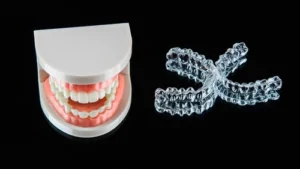 Nighttime clear aligners are a modern alternative to traditional braces and daytime aligners. They use custom aligners made from smooth, transparent material to gently shift your teeth into alignment while you sleep. Instead of wearing them for 20 to 22 hours a day like daytime aligners, you typically wear aligners for about 10 hours each night.
This nighttime treatment appeals to people looking for a low-maintenance, comfortable, and discreet way to achieve a straighter smile. You simply wear the aligners before bed and remove them in the morning, with no interruptions to your daily routine.
How Nighttime Aligners Work
Nighttime aligners follow the same principle as clear aligners used for daytime wear. Your dentist creates a 3D treatment plan that maps out your tooth movement from start to finish.
Here’s how the process usually works:
Step 1: Impressions and Treatment Planning
You start with an impression kit or an in-clinic scan to capture a precise model of your upper and lower teeth. The dental team then uses these impressions to design a custom aligner set tailored to your mouth.
Step 2: Wearing Your Aligners
Each aligner is worn for about 10 hours a night, typically while you sleep. The gentle pressure applied during these hours gradually shifts your teeth into their ideal position. The aligners work in sequence. Once your teeth have adjusted to one aligner, you move on to the next in your treatment plan.
Step 3: Remote Monitoring and Adjustments
Some clinics or treatment providers offer remote monitoring, allowing your progress to be tracked without frequent in-person visits. This ensures expert oversight from your dentist while keeping the process convenient and accessible.
Step 4: Retainers and Maintenance
After your aligner treatment is complete, you’ll wear retainers to maintain your new smile. Retainers help prevent your teeth from moving back into their original position and keep your straighter teeth stable for years to come.
Benefits of Choosing Nighttime Aligners
Nighttime clear aligners have become a popular choice for people who want to straighten teeth conveniently and discreetly. Let’s explore some of their most appealing advantages.
1. Convenient for Busy Schedules
Not everyone has the time or comfort to wear aligners throughout the day. Nighttime treatment is ideal for a busy lifestyle, allowing you to eat, drink, and talk freely during the day while the aligners work overnight.
2. Discreet and Comfortable
Because the aligners are worn only at night, they’re virtually invisible in your day-to-day life. Made from smooth plastic, they also minimise irritation to your gums and cheeks, unlike traditional braces.
3. Less Maintenance During the Day
Nighttime aligners eliminate the need for removing and cleaning aligners after every meal. You can stick to your usual daytime habits without worrying about aligner wear time interruptions.
4. Expert Oversight
Even though nighttime aligners are convenient, they still involve professional supervision. Your dentist regularly monitors your progress to ensure your treatment stays on schedule and your oral health remains in optimal condition.
5. Added Whitening Options
Some treatment plans come with a teeth whitening kit that can be used alongside your aligner treatment. This means you can enjoy both straighter and brighter teeth as part of your new smile journey.
Who Are Nighttime Aligners Best For?
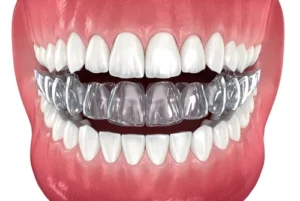 Nighttime clear aligners are generally recommended for people with mild to moderate alignment issues, such as crowding, small gaps, or slightly rotated teeth. They’re ideal for people who prefer to straighten their teeth discreetly and with minimal daytime wear.
However, if you have more complex orthodontic concerns like significant bite issues, severe crowding, or misalignment in the lower arch, your dentist might recommend a different treatment option or a longer wear schedule.
Comparing Nighttime Aligners with Daytime Aligners
While both nighttime aligners and daytime aligners are designed to straighten teeth using clear aligner technology, there are some key differences between the two in terms of wear time, treatment length, and lifestyle impact.
Nighttime Aligners
- Worn for about 10 hours a day, typically during sleep.
- Ideal for those with mild alignment issues, such as small gaps or slight crowding.
- Offer minimal impact on daily activities since they’re worn only at night.
- May require a longer treatment length because there is less daily wear time.
- Provide a convenient and discreet option for people who prefer not to wear aligners during the day.
Daytime Aligners
- Require 20 to 22 hours of wear per day for effective results.
- Suitable for moderate to complex cases where more consistent pressure is needed.
- Typically, they offer shorter treatment times compared to nighttime aligners due to more wear time.
- Need to be removed for eating or drinking, which means more daily maintenance.
- Provide continuous tooth movement throughout the day and night, leading to faster results for some patients.
In summary, nighttime clear aligners are more convenient for people who prefer flexibility and comfort, while daytime aligners are better suited for those seeking faster results or with more complex orthodontic needs. Your dentist can guide you in choosing a treatment plan that aligns with your personal goals, daily routine, and overall lifestyle.
What to Expect During Your Nighttime Treatment
Every aligner treatment is unique, but here’s a general overview of what you can expect:
- Custom aligners: You’ll receive a set of aligners created from your 3D treatment plan.
- Wear time: Aim for 10 hours per night. Consistency is key to effective results.
- Treatment times: Depending on your case, the process may take several months to over a year.
- Progress tracking: With remote monitoring or regular check-ins, your dental team ensures that your treatment stays on schedule.
- Post-treatment care: Once you finish your aligner set, you’ll switch to retainers to preserve your new alignment.
Taking Care of Your Aligners
Good oral hygiene and proper aligner care are essential to ensure the success of your nighttime treatment. Here are some simple tips:
- Clean your aligners daily: Use a soft toothbrush and lukewarm water.
- Store them safely: Keep them in a retainer case when not in use.
- Brush and floss before wearing: This prevents food particles from being trapped and affecting your gums or teeth.
- Avoid eating or drinking while wearing: Only drink water with your aligners in place to prevent staining or damage.
Cost and Payment Plan Options
Nighttime aligners are typically more affordable than traditional braces. Costs vary depending on your case complexity, treatment length, and clinic. Many dental clinics provide flexible payment plan options that let you divide the total cost into easy, manageable instalments. It’s best to speak with your dental team to explore a plan that aligns with both your budget and your treatment needs.
Why Professional Guidance Matters
Although clear aligners offer convenience and flexibility, professional supervision remains crucial. A dentist ensures that your treatment plan is safe, effective, and tailored to your dental health needs. They can also detect underlying concerns, like gum disease or bite misalignment, that may interfere with your treatment progress.
The Path to a Confident Smile
 Nighttime clear aligners combine comfort, convenience, and professional oversight to help you achieve straighter teeth without disrupting your lifestyle. Whether you’re attending meetings, exercising, or socialising, you can go about your day confidently knowing your aligners work while you sleep.
With expert guidance, consistent wear, and commitment to your treatment plan, you can look forward to a healthier and more confident smile in just a few months.
To learn more about nighttime clear aligners or to begin your teeth straightening journey, contact Balmoral Dental Centre at (07) 3113 9789 today.
References
- NHS. (2025, February 17). Take care of your teeth and gums. https://www.nhs.uk/live-well/healthy-teeth-and-gums/take-care-of-your-teeth-and-gums/
- Tadlock, L. (2025). Management of complex orthodontic problems with … [Case series]. [Journal Name]. https://www.sciencedirect.com/science/article/abs/pii/S1073874625000623
- Colgate-Palmolive. (2023, January 9). How does a retainer work? https://www.colgate.com/en-us/oral-health/adult-orthodontics/how-does-a-retainer-work
- Cleveland Clinic. (2022, April 5). Dental impressions: Definition, purpose & procedure. https://my.clevelandclinic.org/health/diagnostics/22671-dental-impressions