

If you’re dreaming of a straighter, more confident smile, but your crooked teeth are holding you back, you’re not alone. Many people assume they need braces or clear aligners to achieve a uniform smile, but there’s another option that’s gaining popularity: veneers on crooked teeth.
Veneers offer a modern cosmetic solution that can reshape your smile in just a few visits without the extended timeline of orthodontics. In this guide, we’ll walk you through how veneers fix crooked teeth, who they’re best suited for, and what to expect if you choose this path to straighter teeth.
What Are Veneers, and How Do They Work?
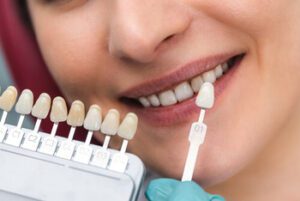
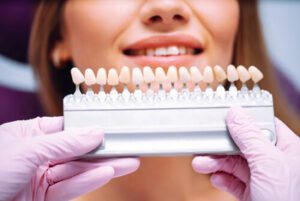
The process involves removing a small portion of tooth enamel to make room for the veneer, ensuring it fits comfortably and maintains the same thickness as your surrounding teeth. The veneers are then bonded securely in place, offering an instant transformation that can enhance not just the shape and colour of your teeth but also their alignment, at least visually.
Can Veneers Really Fix Crooked Teeth?
The short answer? Yes, veneers can fix crooked teeth, particularly if the misalignment is mild to moderate.
Veneers on crooked teeth work by masking the appearance of misalignment, reshaping and repositioning the way your visible teeth appear in your smile line. Rather than physically moving the teeth, veneers provide the illusion of straight teeth.
This makes porcelain veneers an ideal dental treatment for those with:
- Mildly crooked teeth
- Small gaps between teeth
- Teeth that are twisted or uneven in shape or size
- Minor crowding in the front teeth
In cases of significant misalignment or bite complications, veneers alone might not provide a sufficient solution. Your dentist may suggest orthodontic treatment first, such as braces or clear aligners, before placing veneers for the best results.
Who Is a Good Candidate for Veneers on Crooked Teeth?
Patients with mild to moderate dental issues often consider veneers as a viable cosmetic solution. However, it’s important to undergo a thorough examination with your dentist or cosmetic dentist before making a decision.
You may be an eligible candidate if you:
- Maintain healthy teeth and gums, free from untreated decay or periodontal disease.
- Have sufficient tooth structure to support a veneer
- Are you unhappy with the appearance of your crooked teeth
- Want a quicker, non-orthodontic route to a perfect smile
- Are prepared to maintain the results with good dental care and regular checkups
On the other hand, if your teeth are significantly misaligned or your bite causes functional problems, your dentist might recommend orthodontic treatment first.
How Can Veneers Fix Crooked Teeth: The Benefits of Using Veneers to Straighten Teeth
Choosing veneers to fix crooked teeth has several advantages:
- Immediate results: Unlike braces, veneers don’t require months of waiting. You can walk out with straighter teeth in just a couple of visits.
- Natural-looking finish: Because veneers are made from tooth-coloured materials, they blend perfectly with your other natural teeth.
- Customisation: Each veneer is uniquely designed to suit your facial structure, smile goals, and natural tooth colour.
- Minimal invasiveness: Compared to some orthodontic treatments, veneers require less time and fewer appointments.
- Complete smile makeover: Veneers can address several cosmetic issues at once, including discolouration, chips, gaps, and size irregularities, not just misalignment.
What to Expect During the Veneer Procedure
Here’s a simple step-by-step look at how the process works:
- Initial consultation: Your dentist will examine your teeth, discuss your goals, and determine if veneers offer the right solution.
- Smile design: Impressions or scans of your teeth are taken to plan your new smile.
- Tooth preparation: A tiny amount of tooth enamel is carefully removed to accommodate the veneers.
- Temporary veneers: While waiting for the custom-made veneers from the dental lab, you may wear temporary ones.
- Veneer bonding: When your custom veneers are complete, your dentist will securely attach them to your teeth with a durable dental bonding agent.
The result? A more uniform, polished, and confident smile.
Limitations of Veneers for Crooked Teeth
- Correct underlying bite problems
- Change the actual position of the teeth
- Address severe overcrowding or jaw alignment issues
If you have complex alignment concerns, orthodontic treatment may still be necessary, sometimes in combination with veneers, to achieve the most desired results.
Caring for Veneers on Crooked Teeth
Maintaining your new smile requires the same dedication you’d give to natural teeth. Here’s how to protect your investment:
- Brush twice daily with non-abrasive toothpaste
- Floss gently around the veneers
- Avoid biting hard objects like pens or ice
- Visit your dentist every 6 months for check-ups and professional cleanings
- Wear a customised nightguard if you grind your teeth
With the right care, your veneers can remain bright, functional, and beautiful for many years.
Final Thoughts: Are Veneers the Right Option for You?
If you’ve been hiding your smile because of crooked teeth, dental veneers may offer the quick, transformative solution you’ve been looking for. While they’re not suitable for every case, they’re an excellent choice for many people who want to fix mildly crooked teeth without the hassle of braces.
Book a consultation with Balmoral Dental Centre at (07) 3113 9789 to find out whether veneers for crooked teeth can help you get the perfect smile you deserve. A confident smile isn’t just about looks; it’s about feeling good from the inside out.
References
WebMD. (n.d.). Veneers. WebMD. https://www.webmd.com/oral-health/veneers
Healthline. (n.d.). Crooked teeth: Causes, concerns, and how to straighten. https://www.healthline.com/health/dental-and-oral-health/crooked-teeth
Colgate. (n.d.). Do I need a night guard? https://www.colgate.com/en-us/oral-health/bruxism/do-i-need-a-night-g/uard