

Throbbing pain after dental implant crown placement can catch you off guard, particularly when the new tooth felt comfortable on the day it was fitted. You might notice a dull ache that builds by evening, tenderness when you bite down or a patch of gum that won’t settle. Or perhaps the discomfort fades for a day, then comes back.
If this sounds familiar, you’re probably wondering whether it’s part of settling in or a sign that something needs attention. After the time and planning that go into dental implant treatment, it’s natural to want clear answers. Understanding the possible causes can help you decide on your next step.
Quick Overview
- A dental implant crown is the artificial tooth attached to an implant once the bone has grown around it.
- Some pain and gum swelling can follow implant treatment, but swelling or inflammation that persists should be checked.
- Leftover cement, a high bite, teeth grinding, loosened parts and gum inflammation are among the possible triggers.
- How long the pain lasts, whether it’s worsening, and any swelling or looseness usually guide what happens next.
Below, we explain why implant crowns can throb, which signs need prompt attention and how to look after the area.
Is Throbbing Pain After a Dental Implant Crown Normal?
 Some pain, gum swelling or bleeding can follow implant treatment, and these are worth mentioning to our team if they happen. Swelling or inflammation of the gum or bone around an implant should be checked and treated, so throbbing that builds or doesn’t settle deserves a closer look.
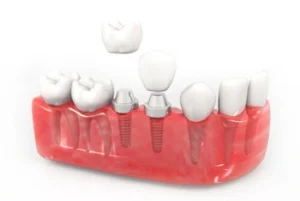
The term dental implant crown refers to the tooth-shaped cap on top of an implant. It sits on a connector called an abutment, which attaches to the implant post in the jaw. The crown is usually fitted after about three months, once the bone has grown around the post.
This differs from pain after dental implant surgery, which follows the first stage of the implant procedure when the post is placed in the bone. During the healing process after surgery, bruising, gum or facial swelling, and some bleeding can occur. Following your aftercare instructions supports proper healing at this stage.
What Causes Throbbing Pain Around an Implant Crown?
Dental implant pain can stem from the crown, its connecting parts or the tissues around them. Possible causes include:
- Leftover cement. Many implant crowns are cemented onto their abutment, and a small amount of cement can be squeezed below the gumline. A 2022 review noted that cement left beneath the gum can inflame the tissue around the implant. Problems were uncommon when the excess was carefully removed.
- Bite misalignment. A crown that sits slightly higher than the teeth beside it can take extra force each time you chew. This may leave the area tender, causing discomfort that throbs after meals.
- Teeth grinding. Clenching or grinding usually happens during sleep, and it often goes unnoticed by the person doing it. A 2024 review linked grinding with more mechanical problems in implant crowns.
- Loosened or damaged parts. A crown can come loose from its abutment, and the screws that hold implant parts together can loosen or break. These are recognised mechanical complications of implant crowns.
- Gum inflammation. Plaque left around the implant through poor oral hygiene can cause gum irritation and inflame the surrounding gum tissue. A history of gum disease may raise this risk, and inflamed tissue around the implant site can become swollen and tender.
- Problems in adjacent teeth. Tooth decay or nerve irritation in a neighbouring natural tooth can produce an ache that seems to come from the implant. Injury or damage to the surrounding teeth is also a listed complication of implant treatment.
Less commonly, implant complications such as infection or nerve damage may be involved, which is one reason ongoing pain deserves a professional look.
When Does Throbbing Pain Need a Prompt Dental Assessment?
If your pain is getting worse rather than better, a prompt dental assessment with our team is worth arranging. The same applies if it comes with swelling, bleeding or a crown that feels loose.
Signs that warrant a closer look include:
- worsening pain, persistent throbbing pain or severe pain that keeps you awake at night
- sharp pain whenever you bite on the crown
- gum swelling or inflammation around the implant
- bleeding from the gum that won’t stop
- pus, or a bad taste or smell coming from near the crown
- a loose crown or implant part
- numbness or tingling in the lip, chin or tongue
- fever, or swelling that spreads into your cheek or face.
Severe pain combined with facial swelling or fever may signal a spreading infection. Because facial swelling can be very serious, it needs to be assessed the same day. If pain persists or any of these symptoms occur, it’s worth having our team examine the area rather than waiting for the discomfort to pass.
How Is Implant Crown Pain Treated?
Treatment depends on what’s causing the pain. Your dentist may examine the gum and surrounding tissues, check how your teeth meet and look at the crown and its parts before suggesting a next step.
 Depending on the findings, a dental professional may:
- adjust the crown’s biting surface so it no longer meets the opposite tooth too early
- clean out trapped cement from beneath the gum
- tighten a loose screw or refit the crown
- treat gum inflammation with a professional clean and tailored oral hygiene advice
- recommend a night splint if you grind your teeth, although a splint usually won’t stop the habit itself
- treat decay or nerve problems in an adjacent tooth.
The right approach depends on your individual situation, and outcomes vary from patient to patient. If inflammation is found, more frequent check-ups may be suggested until it settles.
How Can You Manage Discomfort Until the Area Is Checked?
A few simple measures may help with mild discomfort in the meantime:
- Cold compress: Holding an ice pack wrapped in a cloth against your cheek for short periods may help reduce swelling.
- Pain medication: Over-the-counter pain relief, taken as directed on the label or by your pharmacist, may ease the ache.
- Soft foods: Choosing soft foods and chewing on the other side lets the area rest. Avoid hard or crunchy foods until the cause is known.
- Gentle brushing: Keep cleaning gently around the crown rather than avoiding it, since plaque build-up is what triggers gum inflammation around implants.
Herbal remedies and other home treatments aren’t a substitute for finding the cause.
Caring for Your Implant Crown Once It Settles
Dental implants rely on healthy gum and bone, and proper care helps keep fresh irritation away. Routine guidance includes brushing twice daily and cleaning between the implant and nearby teeth with floss, interdental brushes or a water flosser.
The gum edge around an implant crown can form a small step that a regular toothbrush may miss. A small, pointed brush head can help you reach this area. Implants are usually narrower than natural teeth, so the gaps beside them tend to be wider and suit interdental brushes of the right size. Our team can show you which tools suit your crown.
Maintaining good oral hygiene matters because tissue loss around implants can progress relatively quickly once inflammation sets in. Regular dental check-ups allow early changes to be picked up while they’re easier to manage. Smoking can also affect the health of the gum and surrounding bone, so cutting back or quitting supports your oral health.
Some health conditions, such as diabetes, can raise the chance of complications around an implant. Letting our team know about changes to your health helps us tailor your care.
A Considered Approach to Implant Crown Pain
Throbbing that lingers around an implant crown is worth having assessed, because inflammation around an implant can progress if its cause remains in place. At Balmoral Dental Centre, our dentists can examine the gum around your implant and take X-rays to check the bone. When a more detailed view is needed, we have a 3D cone beam scanner in-house. We’re open seven days and reserve appointment times every day for urgent dental concerns. If you’re dealing with post-crown discomfort, please call us on (07) 3113 9789.
Frequently Asked Questions
Does a dental implant crown have a nerve?
No. A dental crown on a natural tooth covers an existing tooth. An implant crown sits on a metal post anchored in bone, so there’s no nerve beneath it. Any throbbing you feel is likely to come from the tissues around the implant or from neighbouring teeth.
Can sinus congestion make an upper implant crown ache?
It may. Sinusitis is often triggered by a cold, and it can cause facial pressure that you may feel in your teeth. Sinus problems can also occasionally follow implant surgery, so an ache near an upper implant that doesn’t clear when the congestion does is worth having our team check.
Will antibiotics fix a throbbing implant crown?
Not on their own. Antibiotics may ease symptoms for a while, but they won’t remove the underlying cause, such as trapped cement or a loose part. Current guidance on caring for implants also favours physical cleaning over medicines.
Can an implant crown be removed and refitted if it keeps hurting?
Often, yes. Screw-retained crowns are designed to be unscrewed, which allows parts to be cleaned, adjusted or replaced before the crown goes back in. Cemented crowns can be harder to remove, although some cements are chosen partly because they make later removal easier.
Does throbbing mean my implant is failing?
Not necessarily. Persistent pain can come from several sources, so throbbing alone doesn’t confirm implant failure. Progressive bone loss around an implant, seen on X-rays taken over time, is one of the signs dentists look for when checking implant health. An examination is needed to tell these apart.
Any surgical or invasive procedure carries risks. Before proceeding, you should seek a second opinion from an appropriately qualified health practitioner.
References
Healthdirect Australia. Dental implant procedure. https://www.healthdirect.gov.au/dental-implant
Reda R, Zanza A, Cicconetti A, et al. A systematic review of cementation techniques to minimize cement excess in cement-retained implant restorations. Methods and Protocols. 2022;5(1):9. https://www.mdpi.com/2409-9279/5/1/9
Ionfrida JA, Stiller HL, Kämmerer PW, Walter C. Dental implant failure risk in patients with bruxism: a systematic review and meta-analysis of the literature. Dentistry Journal. 2024;13(1):11. https://pmc.ncbi.nlm.nih.gov/articles/PMC11763436/
Sahrmann P, Giannopoulou C. Clinically relevant aspects of professional follow-up care for implant patients. Frontiers in Dental Medicine. 2025;6:1565151. https://www.frontiersin.org/journals/dental-medicine/articles/10.3389/fdmed.2025.1565151/pdf
SA Dental Service. Emergency dental care. https://www.dental.sa.gov.au/emergency
Healthdirect Australia. Sinusitis (rhinosinusitis). https://www.healthdirect.gov.au/conditions/lung-and-respiratory-diseases/sinusitis
Better Health Channel. Teeth grinding. https://www.betterhealth.vic.gov.au/health/ConditionsAndTreatments/teeth-grinding