

Dentures that once felt secure can gradually become uncomfortable, unstable, or prone to slipping. For many people, this happens so gradually that it is easy to put off dealing with it, adapting instead with extra adhesive or avoiding certain foods. But loose dentures are not just a nuisance: over time, an ill-fitting denture can affect how you eat, speak, and maintain the health of your gums and underlying bone.
Understanding why dentures become loose is the first step toward finding an appropriate solution. Several options exist depending on how much fit has been lost and how the bone beneath the denture has changed over time. Understanding dentures and tooth replacement options can help clarify which path suits your current situation.
Quick Overview
- Loose dentures occur when a denture no longer fits snugly against the gum and bone surface it was originally made to match.
- They may affect anyone who has worn dentures for an extended period, though how quickly looseness develops varies between individuals.
- Solutions range from relining and adjustment through to implant-supported options, depending on the extent of bone and tissue changes.
- How well any adjustment holds over time is influenced by ongoing bone resorption, overall health, and how the denture is cared for.
- A clinical assessment is the appropriate starting point to determine what has changed and which approach is most suitable.
Keep reading to understand why dentures loosen, what the warning signs are, and what professional options may help.
Why Do Dentures Become Loose Over Time?
 When teeth are lost, the jawbone that once supported those roots begins to resorb. Without the stimulation of tooth roots transmitting chewing forces into the bone, the body gradually breaks down and reduces the bone in those areas. The jawbone ridge that a denture rests on slowly becomes flatter and narrower, meaning a denture made to fit a particular jaw shape will gradually no longer match it.
This process is most significant in the first year after tooth loss but continues throughout life at a slower rate. It affects virtually all denture wearers to some degree and is the primary reason dentures that fit well initially become loose over time.
Other contributing factors include:
- Natural wear on the denture itself: Over years of daily use, the fitting surface of the denture base and the bite surface of the denture teeth wear down, affecting both comfort and stability.
- Weight changes: Significant weight loss or gain can change the shape of gum tissue, altering how a denture sits.
- Changes to remaining natural teeth: For partial denture wearers, any movement, loss, or dental work on remaining teeth can affect how the denture fits and is supported.
- Poor original fit: Occasionally, a denture may not have been optimally fitted from the outset, leading to early looseness.
What Are the Signs That Dentures Are Becoming Too Loose?
Loose dentures often show their fit issues before they become severely uncomfortable. Signs to watch for include:
- The denture moves, rocks, or slips during eating or speaking
- Sore spots, irritation, or mouth ulcers where the denture contacts the gum
- Difficulty chewing foods that were previously manageable
- Needing to use increasing amounts of denture adhesive to keep the denture in place
- Changes in speech or the way your bite feels
- Clicking or unusual sounds when chewing
If any of these signs are present, a dental assessment is worthwhile. Bone changes after tooth removal may cause dentures to become loose over time and may require adjustments, relining, or a new denture, depending on how much the fit has changed.
What Are the Options for Loose Dentures?
Several professional approaches can address loose-fitting dentures, ranging from relatively simple adjustments to more involved solutions.
Denture relining is often the first option considered when a denture is still structurally sound but has lost its fit. Relining involves adding new material to the fitting surface of the denture to match the current shape of the gum and bone. A hard reline uses a durable acrylic material and provides a longer-lasting result. A soft reline uses a softer material and may be used for patients with sensitive gum tissue or as a temporary measure to allow inflamed tissue to settle before a more permanent reline is done.
Denture replacement becomes necessary when a denture has worn down significantly, when the jawbone has changed so much that relining alone cannot restore a good fit, or when the denture has been in use for many years. How long a denture lasts before replacement is needed varies between individuals depending on bone changes, maintenance, and wear.
Denture adhesive can provide short-term additional retention for dentures that have begun to loosen. It is not a substitute for relining or replacement, and when dentures no longer stay secure, adhesive may provide temporary stability while a professional assessment is arranged.
Implant-supported dentures offer a more stable foundation for people whose dentures continue to loosen despite relining, or who have experienced significant bone loss. By attaching the denture to implants placed in the jawbone, the denture is held in place more securely, and the implants provide bone stimulation that helps slow ongoing resorption. This option involves a more significant commitment in terms of treatment, cost, and healing time, and is not appropriate for everyone.
How to Slow the Rate of Change
While bone resorption after tooth loss cannot be stopped entirely, some factors are within a patient’s control.
- Attend regular dental check-ups. Changes in fit are easier to address early. Dentures should be checked at least yearly, and more frequently if fit issues are noticed.
- Do not sleep with your dentures in. Removing dentures overnight allows gum tissue to rest and reduces continuous pressure on the underlying bone.
- Clean dentures daily. Plaque buildup on dentures contributes to gum inflammation and can affect the condition of the underlying tissue. Use a soft brush and appropriate cleaning solution, and soak dentures as directed.
- Address fit issues promptly. Dentures that do not fit well should be seen to by a dentist rather than left for extended periods, as poorly fitting dentures can cause ongoing trauma to gum tissue and accelerate bone changes.
- Consider implant support early. If implants are an option being considered, acting before significant bone loss has occurred gives more flexibility in treatment planning.
When to See a Dentist About Loose Dentures
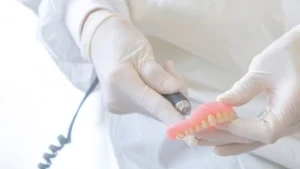 Loose dentures are common, but they are not something to simply manage around indefinitely. If your denture is slipping, causing sore spots, or requiring adhesive to stay in place, it is worth booking an appointment to understand what has changed and what can be done about it.
At Balmoral Dental Centre, we are open seven days a week, including weekends. Our dentists assess the fit of your denture and the current state of the bone and gum tissue beneath it, and discuss what adjustment or replacement options are appropriate for your situation.
If your dentures are no longer fitting as they should, we welcome you to get in touch.
Book an appointment today. Call us at (07) 3113 9789
Frequently Asked Questions
Does denture material affect how quickly dentures become loose?
Denture bases are typically made from acrylic resin, sometimes with a metal framework for partial dentures. The material itself does not significantly affect the rate of bone resorption beneath the denture, which is the main driver of looseness. However, the quality and accuracy of the original fitting does matter. A denture that is not precisely made to the contours of the jaw and gum tissue will fit less securely from the outset and may feel loose sooner. Over time, all denture materials are subject to wear and minor dimensional changes, which is one reason regular check-ups are recommended.
Can ill-fitting dentures cause mouth sores?
Yes. When a denture no longer sits evenly against the gum tissue, it can create pressure points and friction during eating and speaking. This leads to sore spots, irritation, and in some cases ulcers or persistent mouth sores. Mouth sores that do not heal within two weeks should always be assessed by a dentist, as chronic irritation from a poorly fitting denture can affect the health of the oral tissue. Adjusting or relining the denture is generally the first step in relieving this kind of discomfort.
Note: Any surgical or invasive procedure carries risks. Before proceeding, you should seek a second opinion from an appropriately qualified health practitioner.
References
Healthdirect Australia. (n.d.). ‘Dentures’. Healthdirect Australia. Canberra, ACT: Australian Government. https://www.healthdirect.gov.au/dentures
Better Health Channel. (n.d.). ‘Dentures’. Better Health Channel. Melbourne, VIC: State Government of Victoria, Department of Health. https://www.betterhealth.vic.gov.au/health/conditionsandtreatments/dentures
Australian Dental Association. (n.d.). ‘Dentures’. Teeth.org.au. Sydney, NSW: Australian Dental Association. https://www.teeth.org.au/dentures