

A loose adult tooth is not something to wait out. Unlike baby teeth, permanent teeth are not designed to move, and when one does, it usually signals that the structures holding it in place have been compromised. In most cases, the underlying cause is gum disease, which can quietly destroy the bone and tissue around teeth over years before the looseness becomes noticeable.
The good news is that how far this can be treated depends largely on how early it is caught. If you have noticed movement in one or more teeth, or have been told you have advanced gum disease, understanding the treatment pathway is a practical starting point. Information about periodontal treatment and gum care can help you understand what assessment and management involves.
Quick Overview
- Loose teeth caused by gum disease occur when the bone and tissue supporting the tooth have been damaged by a long-term bacterial infection.
- It may affect adults with untreated or advanced periodontitis, though the degree of looseness and what can be done about it varies significantly between patients.
- Treatment may involve deep cleaning, surgical procedures, or in more severe cases, tooth stabilisation or replacement options, depending on how much bone support remains.
- How well gum disease responds to treatment is influenced by how advanced the condition is, overall health, smoking history, and whether the disease can be fully controlled.
- A clinical assessment is the appropriate starting point to understand what is causing the looseness and what options are available.
Keep reading to understand why gum disease causes teeth to loosen, what treatment may involve, and when extraction may be unavoidable.
Why Gum Disease Causes Teeth to Loosen
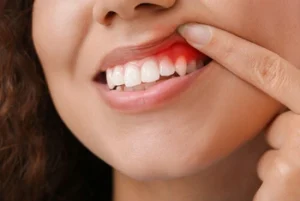 Teeth are held in place by the periodontal ligament, gum tissue, and the surrounding bone. Gum disease, specifically periodontitis, attacks all three. When plaque is not adequately removed from the teeth and gum line, the bacteria it contains trigger an inflammatory response in the gum tissue. Over time, this inflammation causes the gum to pull away from the tooth, forming pockets that trap more bacteria and accelerate damage.
As the infection deepens, it begins to erode the bone that anchors the tooth root. Once a significant proportion of that bone is lost, the tooth has less structural support and begins to move. At this stage, the bone loss is generally not reversible. What treatment can do is stop the disease progressing further, manage the infection, and in some cases stabilise the tooth in its current position.
The degree of looseness matters. A tooth with slight movement and manageable bone loss sits in a very different position to one with severe movement and almost no remaining support.
Non-Surgical Treatment: The First Step
For the majority of patients, treatment begins with a thorough non-surgical approach before any surgical options are considered. Gum disease affects around 3 in 10 Australian adults with moderate to severe periodontitis, and in many of these cases, non-surgical management is the appropriate starting point.
Scaling and root planing, sometimes called a deep clean, is the primary non-surgical treatment for periodontitis. It involves the removal of plaque and hardened calculus deposits from below the gum line, followed by smoothing of the tooth root surfaces to remove areas where bacteria tend to reattach. This is typically performed under local anaesthetic over one or more appointments, depending on how many teeth are affected and how deep the pockets are.
The goal of this phase is to control the infection and allow the gum tissue to begin healing. In cases where looseness is mild and bone loss is moderate, bringing the disease under control through scaling and root planing can stabilise the tooth.
Improved oral hygiene at home is an equally important part of this stage. Brushing twice daily, flossing, and using interdental tools to clean between teeth remove the plaque that drives the disease. Without consistent hygiene, treatment results are unlikely to hold.
Surgical Treatment Options
Where non-surgical treatment has not fully controlled the infection, or where bone loss is more significant, surgical procedures may be discussed. A stepwise treatment approach is commonly used, with the level of treatment matched to the stage of the disease.
Pocket reduction surgery involves lifting back the gum tissue to allow a more thorough clean of the root surfaces and the bone beneath. This reduces the depth of the gum pockets, making it harder for bacteria to accumulate in areas that cannot be reached by normal brushing or professional cleaning.
Bone grafting may be used in areas where bone loss has created a defect around the tooth root. Graft material, which may be synthetic or derived from other sources, is placed at the site to encourage the body to regenerate bone in that area. Not every defect is suitable for grafting, and the outcome depends on the shape and extent of the bone loss.
Guided tissue regeneration uses a barrier membrane placed between the gum tissue and the bone to prevent gum tissue from growing into the space before the slower-growing bone has a chance to regenerate. This can be used alongside grafting to support bone and ligament regrowth in suitable cases.
Gum grafting addresses gum recession that has exposed the tooth root, which often accompanies advanced periodontitis. A graft, typically taken from the roof of the mouth or a donor source, is attached to the affected area to cover exposed root surfaces and restore gum tissue.
When a Tooth Cannot Be Saved
In cases of advanced periodontitis where a tooth has extreme mobility and little remaining bone support, extraction may be the most appropriate course of action. Retaining a tooth that cannot be stabilised can allow the ongoing infection to affect neighbouring teeth and accelerate bone loss in adjacent areas.
When extraction is necessary, replacement options including dental bridges and implants may be appropriate, depending on the state of the surrounding bone and gum tissue and whether gum disease has been fully controlled. Placing an implant into a site with active or poorly managed gum disease significantly raises the risk of failure, so disease control must come first.
Protecting the Teeth That Remain
Whether teeth have been treated and stabilised or some have been lost, preventing further disease is the priority. Gum disease can recur if the conditions that allowed it to develop are not managed.
 Key steps include:
- Maintaining thorough daily oral hygiene, brushing twice daily and flossing every day
- Attending regular professional check-ups and cleaning appointments, which allow early signs of recurrence to be caught
- Quitting smoking, which significantly worsens gum disease and impairs healing
- Managing systemic conditions such as diabetes, which has a two-way relationship with gum disease
- Wearing a nightguard if teeth grinding is identified, as excessive bite force can accelerate bone loss around already-compromised teeth
A Considered Approach to Treatment
Loose teeth caused by gum disease represent a serious dental concern, but the range of what is possible depends entirely on the individual situation. Some teeth can be stabilised with treatment and ongoing management. Others may not be saveable. What matters is having an accurate clinical picture before any decisions are made.
At Balmoral Dental Centre, we are open seven days a week, including weekends. Our dentists take time to assess the full extent of gum disease, explain what the findings mean, and discuss what treatment options are appropriate for your situation before any commitment is made.
If you have noticed a loose tooth or have concerns about your gum health, we welcome you to get in touch.
Call us on (07) 3113 9789
Note: Any surgical or invasive procedure carries risks. Before proceeding, you should seek a second opinion from an appropriately qualified health practitioner.
Frequently Asked Questions
Can a loose tooth from gum disease be tightened again?
In some cases, yes. If the looseness is mild and the gum disease can be brought under control through treatment, the gum tissue can heal around the tooth and the tooth may become more stable over time. However, if the bone loss is significant, the tooth is unlikely to regain the level of support it once had. The outcome depends on how much supporting bone remains, how well the disease responds to treatment, and how consistently good oral hygiene is maintained afterwards.
How quickly does gum disease cause teeth to loosen?
Gum disease progresses at different rates depending on factors including genetics, smoking, systemic health, and oral hygiene habits. In some people, bone loss occurs gradually over many years. In others, particularly those with aggressive periodontitis or poorly controlled diabetes, the disease can progress more rapidly. Because the disease often causes little pain, significant looseness may appear without obvious warning, which is why regular dental check-ups are important for catching gum problems early.
References
Healthdirect Australia. (2025). ‘Gum Disease’. Healthdirect Australia, October. Canberra, ACT: Australian Government. https://www.healthdirect.gov.au/gum-disease
Australian Dental Association. (n.d.). ‘Gum Disease Treatment’. Teeth.org.au. Sydney, NSW: Australian Dental Association. https://www.teeth.org.au/gum-disease-treatment
Better Health Channel. (n.d.). ‘Gum Disease’. Better Health Channel. Melbourne, VIC: State Government of Victoria, Department of Health. https://www.betterhealth.vic.gov.au/health/conditionsandtreatments/gum-disease