

Most people brush their teeth twice a day without giving much thought to what else their routine involves. Flossing is one step that often gets skipped or done inconsistently, and whether to do it before or after brushing is a question worth answering properly.
What matters most is that flossing actually happens, and that it is done correctly. The sequence is secondary to the consistency. A clear picture of what dental hygiene and preventive care involves can help you build a routine that works for your teeth and gums over the long term.
Quick Overview
- The question of whether to floss before or after brushing comes down to what sequence helps you clean more effectively and consistently.
- Both orders have a place in a good oral hygiene routine, though flossing first may offer some advantages in how fluoride from toothpaste reaches between teeth.
- What influences the outcome most is whether interdental cleaning is done at all, how thoroughly it is done, and how regularly.
- Individual factors such as tooth spacing, gum sensitivity, and the tools used can all affect which approach works best.
- A dental check-up is the best opportunity to get personalised guidance on your routine.
Keep reading to understand the case for each approach, what the evidence suggests, and how to make interdental cleaning a consistent part of your day.
Why Interdental Cleaning Matters
A toothbrush, however well used, cannot clean all surfaces of the teeth. The spaces between teeth and just below the gum line are where plaque accumulates without being disturbed by brushing alone.
Plaque is a sticky film of bacteria that forms on and between teeth throughout the day. When it is not removed, it produces acids that erode tooth enamel and irritate gum tissue over time. Gum disease and tooth decay both have their roots in plaque that is left undisturbed between cleanings.
Brushing twice daily with a fluoride toothpaste and soft-bristled toothbrush addresses the outer, inner, and chewing surfaces of teeth. But the contact points between teeth and the margins along the gum line require a different tool. That is where floss, interdental brushes, water flossers, and dental tape come in.
The Case for Flossing Before Brushing
Flossing before brushing is increasingly supported by dental guidance and is considered by many dentists to be the more effective sequence. The reasoning is practical: flossing first loosens and dislodges the plaque and food particles trapped between teeth. Brushing afterwards sweeps those loosened particles away and coats all tooth surfaces, including the areas between the teeth, with fluoride from the toothpaste.
When you floss first, you create cleaner interdental surfaces before the toothpaste is applied. This means fluoride has less debris to contend with and may penetrate more effectively into the spaces between teeth, where decay commonly begins.
There is also a psychological benefit to this approach for some people: getting the less comfortable task done first means brushing becomes the finishing step rather than something that has already been completed. For those who find it easy to skip flossing if they have already brushed, flossing first removes the temptation.
The Case for Flossing After Brushing
 Flossing after brushing also has its place. Some people find that brushing first removes the layer of loosened plaque and food from the main surfaces of the teeth, making it easier to work floss through tight contact points without dragging debris back across the teeth. After brushing, a mouthwash or water can also be used to rinse away what the floss has loosened.
For people who use fluoride mouthwash, flossing after brushing and before rinsing creates a sequence that ends with a fluoride-rich wash reaching freshly cleaned surfaces. This is a sensible routine for those who incorporate mouthwash regularly.
How to Floss Correctly
The benefit of flossing depends entirely on how it is done. Poor technique can leave most of the plaque between teeth undisturbed, or in some cases damage gum tissue through excessive force.
To floss correctly, gently slide the floss between teeth and curve it into a C-shape around each tooth. Move the floss up and down along the side of the tooth, going slightly under the gum line to remove bacteria from that area. Use a fresh section of floss for each tooth to avoid transferring bacteria from one space to the next.
Key points to keep in mind:
- Use around 30 to 45 centimetres of floss, wrapping the ends around your middle fingers so you can control it with your thumbs and index fingers
- Do not snap or force the floss down: a gentle sawing motion helps it slide through tight contacts without harming the gum
- Floss all contacts, including the back surfaces of the last molars
What Tools Are Available for Interdental Cleaning
Traditional string floss is the most widely available option and works well for most people with standard spacing between teeth. For those who find string floss difficult to use, several alternatives are worth considering.
Interdental brushes are small, cone-shaped or cylindrical brushes that fit between teeth. They are particularly effective for people with larger gaps, those with bridges or implants, or anyone who finds floss hard to manoeuvre. Different sizes suit different spaces, and a dentist can advise on the right size for your teeth.
Floss picks are pre-threaded plastic tools that allow single-handed flossing. They are practical for people with limited dexterity or for use when travelling.
Water flossers use a directed stream of water to dislodge plaque and food from between teeth and along the gum line. They are a useful option for people with braces, implants, or limited manual dexterity. They are generally considered supplementary to, rather than a complete replacement for, floss or interdental brushes.
Dental tape is a broader, flatter version of floss that may be more comfortable for people with wider spaces between teeth or sensitive gums. Cleaning between teeth with floss or interdental brushes is recommended as part of a complete daily oral hygiene routine.
How to Build a Consistent Routine
Consistency is the foundation of good oral hygiene. A routine that is done thoroughly every day will always outperform an occasional perfect technique. The sequence matters less than the regularity.
Brushing twice daily, cleaning between teeth once daily using floss or interdental brushes, and attending regular dental check-ups are the core recommendations for maintaining good oral health.
Practical tips for making interdental cleaning a daily habit:
- Keep your floss or interdental brushes with your toothbrush so they are visible and accessible
- Pick a time of day that suits your schedule: most people find the evening works best for a thorough clean after the day’s eating
- If you miss a day, do not skip the next one; regularity over weeks and months is what makes the difference
- Consider using an app or alarm as a temporary reminder until the habit is established
When to Discuss Your Routine With a Dentist
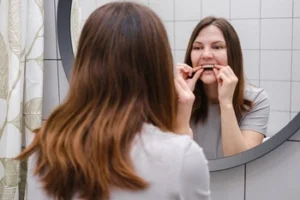 A dental check-up is the most practical opportunity to get personalised advice about your oral hygiene routine. A dentist can assess whether your current approach is reaching all areas effectively, demonstrate correct technique, and recommend tools suited to the specific spacing and condition of your teeth and gums.
At Balmoral Dental Centre, we are open seven days a week, including weekends. Our dentists take time to go through oral hygiene with patients at check-ups and can provide practical guidance on making your daily routine more effective.
If it has been a while since your last check-up, or if you have questions about your flossing technique, we welcome you to get in touch.
Book an appointment today. Call us on (07) 3113 9789.
Frequently Asked Questions
Does it matter whether I use a manual or electric toothbrush?
Both a manual toothbrush and an electric toothbrush can clean teeth effectively when used correctly. Electric toothbrushes make it easier to maintain consistent pressure and motion, which can be helpful for people who tend to brush too hard or too quickly. A good manual toothbrush should have a small head and soft bristles so it can reach all surfaces, including the inside surfaces of back teeth, without damaging the gum line. Whichever type you use, brushing for two minutes at least twice a day with fluoride toothpaste is what matters most for your daily brushing routine.
Should I rinse after brushing?
Most dental guidance recommends spitting out excess toothpaste rather than rinsing with water straight after brushing. Rinsing immediately washes away the fluoride left on your teeth by the toothpaste, reducing the time it has to strengthen tooth enamel and prevent cavities. If you are not used to skipping the rinse, it takes a few days to adjust. You can still rinse your mouth at other times during the day, just not immediately after brushing when the fluoride is doing its work.
How long should I brush my teeth?
Brushing for two minutes, twice a day, is the standard recommendation for keeping plaque bacteria under control and maintaining good gum health. Two minutes allows enough time to cover all surfaces of every tooth, including the outer, inner, and chewing surfaces, as well as the areas along the gum line. Many people significantly underestimate how long they are brushing. A timer, a phone app, or an electric toothbrush with a built-in timer can help you reach the full two minutes consistently.
Can poor oral hygiene cause bad breath?
Yes. Bad breath is commonly caused by plaque bacteria that accumulate on the teeth, tongue, and along the gum line when oral hygiene is inconsistent. Flossing and brushing remove the food particles and bacteria that break down in the mouth and produce odour. Regular flossing is particularly important because the spaces between teeth and just below the gum line are where bacteria can build up without being reached by brushing alone. If bad breath persists despite a thorough daily routine, it is worth raising with your dentist as it can sometimes indicate an underlying gum health issue.
Does flossing help with tooth sensitivity?
Flossing itself does not directly treat tooth sensitivity, but keeping the gum line clean through regular flossing helps prevent gum recession, which is one of the more common causes of sensitivity. When gum tissue recedes, it exposes the root surface of the tooth, which is not protected by enamel. Once exposed, these surfaces are more vulnerable to sensitivity from temperature and pressure. Maintaining good gum health through consistent interdental cleaning is one of the practical steps toward protecting against this type of sensitivity over time.
References
Healthdirect Australia. (2025). ‘Dental Care and Teeth Cleaning’. Healthdirect Australia. Canberra, ACT: Australian Government. https://www.healthdirect.gov.au/teeth-cleaning
Better Health Channel. (n.d.). ‘Teeth and Mouth Care’. Better Health Channel. Melbourne, VIC: State Government of Victoria, Department of Health. https://www.betterhealth.vic.gov.au/health/conditionsandtreatments/teeth-care
Australian Dental Association. (n.d.). ‘Flossing’. Teeth.org.au. Sydney, NSW: Australian Dental Association. https://teeth.org.au/flossing
Australian Dental Association. (n.d.). ‘Policy Statement 2.2.3: Oral Hygiene’. Australian Dental Association. Sydney, NSW: Australian Dental Association. https://ada.org.au/policy-statement-2-2-3-oral-hygiene