

It is a common worry after root canal treatment: will the tooth eventually fall out anyway? The short answer is that a properly treated and restored tooth can last for many years, but certain factors influence how long it holds up. Understanding what those factors are gives you a clearer picture of what to expect, and what you can do to protect the tooth over time.
Root canal treatment removes infected pulp tissue from inside the tooth, but what happens after that procedure matters just as much as the treatment itself. A look at what root canal therapy involves and how the tooth is restored can help clarify what good long-term care looks like.
Quick Overview
- Root canal-treated teeth do not automatically fall out, but they are more vulnerable than healthy teeth and require specific care to last.
- A tooth that has had root canal treatment may be at risk of fracture, decay, or loosening if it is not properly restored or maintained.
- Crown placement after treatment is one of the most significant factors in how long a treated tooth survives.
- How well the tooth holds up over time also depends on the location in the mouth, oral hygiene, and whether problems are caught early.
- Regular dental check-ups are the key to identifying issues before they become irreversible.
Keep reading to understand what affects the lifespan of a root canal-treated tooth and what can be done to protect it.
Why Root Canal-Treated Teeth Are More Vulnerable
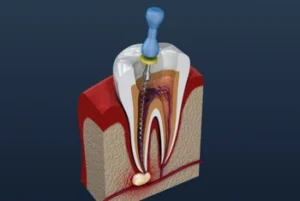 A root canal removes the infected or damaged pulp tissue from inside the tooth, including the blood vessels and nerve tissue. Once this is done, the tooth no longer has a living internal structure. It is still anchored in the jaw by the periodontal ligament and surrounding bone, but without the internal support of healthy pulp tissue, the remaining tooth structure can become more brittle over time.
This brittleness matters most during everyday chewing. A treated tooth that has not been properly restored is more prone to cracking or fracturing under normal bite forces, particularly if it is a molar or premolar at the back of the mouth where the chewing forces are greatest. A fracture that runs vertically through the root is generally not repairable and typically means the tooth cannot be saved.
The treated tooth can also be affected by new decay if oral hygiene is poor, or by gum disease that causes bone loss around the root. Neither of these is unique to root canal-treated teeth, but they carry the same consequence: if left unmanaged, they can lead to the tooth becoming loose or needing to be extracted.
The Role of the Dental Crown
The most significant factor in how long a root canal-treated tooth lasts is whether it receives a proper restoration, particularly a dental crown for back teeth.
Root canal treatment has a 90 to 95 per cent success rate for a functional tooth, provided good oral hygiene is maintained and regular dental check-ups are attended. However, this outcome depends heavily on how well the tooth is restored after treatment.
A crown provides a protective layer over the weakened tooth structure, absorbs bite forces, and seals the tooth against bacterial re-entry. Without a crown, a root canal-treated tooth is significantly more vulnerable.
What Happens Without a Crown
Teeth that undergo root canal treatment but are left without appropriate restoration face a higher risk of failure. A filling placed after treatment provides a temporary seal but does not offer the structural protection of a crown. Over time, fillings can wear down, fracture, or allow bacteria to re-enter the tooth, potentially leading to reinfection.
Without a crown, root canal teeth are far more vulnerable. Teeth treated without a crown are six times more likely to be removed than those that were crowned. This is particularly true for molar teeth, which sit at the back of the mouth and bear the bulk of chewing forces during meals.
The decision between a filling and a crown after root canal treatment depends on factors including how much natural tooth structure remains, the location of the tooth in the mouth, and the patient’s bite. For back teeth, a crown is generally the recommended restoration.
Signs That a Root Canal-Treated Tooth May Be Failing
Root canal treatment can occasionally fail. Signs that may indicate a problem include:
- Persistent or returning pain in the treated tooth
- Swelling or tenderness in the gum around the tooth
- Sensitivity to pressure that does not resolve after the initial healing period
- Visible darkening of the tooth
- A pimple-like swelling on the gum near the tooth, which may indicate a recurring abscess
If any of these signs appear, it is worth booking a dental assessment promptly. In some cases, a second root canal treatment can address the issue. In others, the tooth may not be salvageable, and extraction becomes the appropriate choice.
How to Protect a Root Canal Treated Tooth
Once root canal treatment and crown placement are complete, ongoing care is the most important factor in how long the tooth lasts.
- Maintain daily oral hygiene. Brushing twice daily and flossing keep bacteria at bay and protect both the treated tooth and the surrounding gum tissue. The tooth itself cannot decay in the same way, but the surrounding gum and bone can still be affected by plaque buildup.
- Attend regular dental check-ups. X-rays taken at routine appointments allow a dentist to monitor the bone and tissue around the treated tooth and identify early signs of problems before they become serious.
- Avoid very hard foods. Biting down on hard items such as ice, hard nuts, or hard confectionery puts significant stress on crowned teeth and can cause fractures.
- Wear a nightguard if you grind your teeth. Teeth grinding places repeated heavy forces on all teeth, including those that have been root canal treated. A nightguard reduces this force during sleep.
If root canal treatment saves a tooth, proper care of that tooth after treatment is what determines whether it remains functional for many years or requires further intervention.
A Practical Approach to Long-Term Care
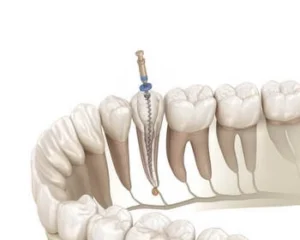 Root canal-treated teeth do not fall out on their own. What leads to their loss, when it happens, is generally a combination of factors: inadequate restoration, unmanaged decay, gum disease, fracture, or failure to attend regular check-ups. Most of these are addressable if caught early.
At Balmoral Dental Centre, we are open seven days a week, including weekends. Our dentists take time to monitor root canal-treated teeth at check-ups and discuss what protective measures are appropriate for your situation.
If you have had root canal treatment and are unsure about the condition of that tooth, or if you are experiencing any discomfort, we welcome you to get in touch.
Book an appointment today. Call us on (07) 3113 9789.
Frequently Asked Questions
How long does a root canal-treated tooth last?
With proper restoration and good oral hygiene, a root canal-treated tooth can last for many years and in some cases for life. Outcomes vary depending on the location of the tooth, how well it was restored, whether a crown was placed, and how consistently the patient maintains dental check-ups and daily hygiene. Back teeth are under more chewing force and generally benefit most from crown protection to extend their lifespan.
Can a root canal-treated tooth get reinfected?
Yes. Although the pulp tissue has been removed, bacteria can re-enter the tooth if the filling or crown fails over time, or if the original treatment did not fully clear the canals. Signs of reinfection include returning pain, swelling, or a recurring abscess near the tooth. A second root canal treatment can sometimes resolve reinfection, depending on the extent of the problem and the condition of the remaining tooth structure.
Note: Any surgical or invasive procedure carries risks. Before proceeding, you should seek a second opinion from an appropriately qualified health practitioner.
References
Better Health Channel. (2026). ‘Root Canal Treatment’. Better Health Channel. Melbourne, VIC: State Government of Victoria, Department of Health. https://www.betterhealth.vic.gov.au/health/conditionsandtreatments/root-canal-treatment
Australian Dental Association. (n.d.). ‘Root Canal Treatment’. Teeth.org.au. Sydney, NSW: Australian Dental Association. https://teeth.org.au/root-canal-treatment
Healthdirect Australia. (2024). ‘Root Canal Treatment’. Healthdirect Australia. Canberra, ACT: Australian Government. https://www.healthdirect.gov.au/root-canal-treatment