

Dental implants are now recognised as one of the most reliable, durable and long-lasting options for replacing missing teeth. They not only restore your smile but also support your oral health by functioning much like natural teeth.
Many patients might only consider a dental implant to be an artificial tooth. Still, it’s a carefully designed system of multiple dental implant components that work together to create a stable and natural-looking result.
Learning about these parts allows you to appreciate the skill, detail, and careful planning involved in every dental implant treatment.
What Are the Main Dental Implant Components?
Dental implants typically consist of three key components: the implant fixture, the abutment, and the crown. Every component plays an essential role in providing the replacement tooth with strength, proper function, and a natural appearance.
The Implant Fixture: The Foundation Beneath the Gums
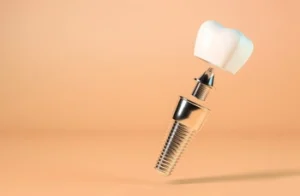 The implant fixture is at the core of every dental implant, a small screw-like structure made from titanium or titanium alloy. This part is surgically placed into the jaw and functions as the artificial tooth’s root. During the healing process, the bone fuses with the fixture in a process called osseointegration, helping the implant integrate securely and become a lasting part of your jaw structure.
This strong bond between the bone and the implant allows it to support a single tooth, multiple teeth, or even full dentures. Because titanium is biocompatible, it integrates well with bone tissue, providing a secure and durable foundation that mirrors the strength of natural tooth roots.
The Abutment: Linking the Implant and the Crown
Once healing is complete and the implant has properly fused with the bone, the next step involves attaching the abutment. This small but essential component connects the implant fixture to the visible prosthesis. In other words, the abutment connects the internal part of the implant to the crown above the gums.
It bridges the underlying implant post and the artificial tooth, ensuring stability and proper alignment with the surrounding teeth. The abutment placement is a simple procedure that involves little discomfort and requires much less healing time than the initial surgery.
The Crown: The Visible Part of Your New Tooth
The final stage of dental implant treatment involves securing the crown to the abutment. The crown is the visible part of the tooth replacement and is custom-made to blend seamlessly with your other teeth. It is carefully designed in terms of colour, shape, and size, ensuring that your smile looks natural and feels comfortable.
Depending on the materials used, crowns can be made to mimic the translucency of natural enamel, making them virtually indistinguishable from your real teeth. Once fitted, the crown allows patients to eat, speak, and smile comfortably, just as they would with their natural teeth.
Dental Implant Components for Multiple Tooth Replacement
Dental implant components are not limited to single tooth replacements. They can also be used to support bridges or full dentures for patients missing multiple teeth. In these cases, several implant fixtures may be placed strategically across the jaw to distribute pressure evenly and provide a secure foundation for larger prostheses. This approach offers greater comfort, improved function, and better long-term oral health than traditional removable dentures.
Debunking Common Myths About Dental Implant Components
Even though dental implants have an excellent success rate, a few myths still make some patients unsure about getting them. Let’s clear up some common misunderstandings so you can make a proper decision about your dental implant treatment.
Myth 1: Dental Implants Are Painful
Many people assume implant surgery is painful, but most patients experience only mild discomfort. With local anaesthesia and modern techniques, the procedure is usually straightforward, and any post-surgery soreness can be managed easily with medication and proper care.
Myth 2: Dental Implants Look Fake
A well-made dental implant looks just like a natural tooth. Each crown is custom-designed to match the colour and shape of your surrounding teeth, creating a result that feels and appears completely natural.
Myth 3: Implants Need Special Care
Looking after dental implants is much the same as maintaining your natural teeth. Regular brushing, flossing, and check-ups are enough to keep them clean and healthy while protecting your gums and surrounding teeth.
Myth 4: Only Older Adults Can Get Implants
Dental implants aren’t just for seniors. Anyone with healthy gums and enough bone structure in the jaw can benefit from them, whether they need to replace a single tooth or multiple teeth.
Bottom Line: Why Understanding Dental Implant Components Matters
 Knowing what goes into your dental implant treatment can help you appreciate the level of precision and quality behind it. Each dental implant component is chosen for its durability, compatibility, and ability to support natural function. From the titanium implant fixture to the abutment and crown, each element plays a vital role in ensuring that the final result looks and feels just like a natural tooth.
When cared for properly through consistent oral hygiene and routine dental visits, dental implants can last for many years, providing a dependable and long-term solution for replacing missing teeth. By understanding the process and the role of each component, patients can make more informed decisions about their treatment and enjoy the long-term benefits of a strong, healthy, and natural smile.
For personalised care and expert guidance on dental implant treatment, contact Balmoral Dental Centre at (07) 3113 9789 to book your consultation.
Note: Any surgical or invasive procedure carries risks. Before proceeding, you should seek a second opinion from an appropriately qualified health practitioner.
References
NHS. (n.d.). How to keep your teeth clean. Retrieved from https://www.nhs.uk/live-well/healthy-teeth-and-gums/how-to-keep-your-teeth-clean/
Cleveland Clinic. (n.d.). Dental implants. Retrieved from https://my.clevelandclinic.org/health/treatments/10903-dental-implants
Healthdirect Australia. (n.d.). Local anaesthetic. Retrieved from https://www.healthdirect.gov.au/local-anaesthetic