

Bone loss is one of the most significant factors that can complicate the path to dental implants. When a tooth is lost or extracted, the jawbone in that area begins to resorb, or shrink, over time because it is no longer being stimulated by the tooth root. The longer a tooth is missing, the more pronounced this change can become, and the implications for implant treatment are significant.
For people considering implants, understanding how bone loss develops, what causes it, and how it can be addressed is a practical first step. Information about dental implant treatment options can help you understand what a treatment assessment involves and what options are available.
Quick Overview
- Dental implant bone loss refers to the reduction in jawbone volume that can occur after tooth loss, gum disease, or around existing implants.
- It may affect anyone who has lost teeth or had prolonged gaps in their dental history, though the degree varies considerably between individuals.
- In some cases, bone loss can be addressed before or during implant treatment through grafting or regeneration procedures, though not all patients are suitable candidates.
- How well bone responds to treatment depends on factors including the extent of loss, overall health, smoking, and the presence of conditions such as diabetes.
- A clinical assessment, including imaging, is needed to determine the state of the jawbone and whether implant treatment is appropriate.
Keep reading to understand why bone loss happens, what it means for implant suitability, and what treatment options may be available.
Why Bone Loss Happens Around Missing Teeth
Natural tooth roots do more than anchor teeth in place. They transmit the forces of biting and chewing into the jawbone, which stimulates the bone to maintain its density and structure. When a tooth is lost, that stimulation stops. The bone in the affected area begins to resorb, gradually reducing in both height and width.
This process can begin within weeks of a tooth being lost and continues over time. In some cases, prolonged tooth loss can significantly change the shape of the jaw and affect surrounding teeth.
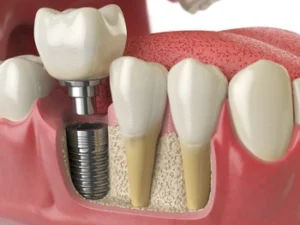
This is one of the reasons implants are generally considered preferable to bridges or dentures for replacing missing teeth from a bone health perspective. An implant, once placed and integrated, functions similarly to a natural tooth root and continues to stimulate the bone around it.
Risk Factors That Can Accelerate Bone Loss
Several factors can increase the rate or severity of jawbone loss, making implant placement more complex:
- Gum disease: Advanced gum disease (periodontitis) actively destroys the bone and tissue around teeth. Any active gum disease should be fully treated before implant treatment is considered.
- Smoking: Smoking impairs blood flow and healing, reducing the body’s ability to maintain bone density and increasing the risk of implant failure.
- Uncontrolled diabetes: Poorly controlled diabetes affects bone metabolism and the body’s ability to heal after surgical procedures.
- Poor nutrition: Deficiencies in calcium and vitamin D can reduce overall bone density, affecting the quality of bone available for implant support.
- Prolonged tooth absence: The longer a site is left without a tooth or implant, the more bone resorption typically occurs.
Understanding which of these factors apply to you is part of what a dental assessment is designed to establish.
How Bone Loss Is Assessed Before Implant Treatment
 Before any implant can be placed, a dentist assesses the state of the jawbone to determine whether there is enough bone in the right location to support an implant safely. This typically involves X-rays and, in many cases, a three-dimensional cone beam CT scan, which gives a detailed picture of bone height, width, and density.
The assessment also takes into account overall health, medications that may affect healing, and the position of nearby structures such as nerves and, in the upper jaw, the sinus membrane. The information gathered is used to plan the implant placement and determine whether any preparatory work is needed.
The area of the missing tooth needs to be carefully assessed before implant placement, including evaluation of gum and bone health, available space, bite, and general health. Not everyone assessed will be a suitable candidate for standard implant treatment without additional preparation.
What Happens When There Is Not Enough Bone
Insufficient bone at an implant site does not automatically mean that implants are not possible, but it does mean that additional steps are likely needed before or at the time of placement.
Bone grafting is a procedure in which bone material is placed at the deficient site to rebuild volume and density. The graft material may come from the patient’s own bone, a donor source, or synthetic alternatives. Over a period of months, the body incorporates the graft, creating a more solid foundation for the implant. The timeline for healing varies depending on the size of the graft and the individual’s healing capacity.
Guided bone regeneration uses a membrane placed over the grafting material to protect the site and encourage the body’s own bone cells to regenerate in a controlled area. This is commonly used alongside grafting for more extensive deficiencies.
Sinus lift procedures apply specifically to the upper jaw, where the sinus cavity sits close to the upper molar roots. When bone height in this area is insufficient, a sinus lift raises the sinus membrane to create space for bone to be added, allowing implants to be placed at an appropriate depth.
Not every patient who needs these procedures will be suitable for them, and not every site will respond as expected. A thorough discussion with your dentist before committing to treatment is important.
Bone Loss Around Existing Implants
Bone loss can also occur around implants after they have been placed. Inflammation of the gum and bone tissue around a dental implant is known as peri-implantitis. Left untreated, gum disease around an implant can cause ongoing bone loss that ultimately threatens the stability of the implant.
Peri-implantitis is most commonly associated with poor oral hygiene, smoking, a history of periodontitis, and certain medical conditions. The symptoms can include bleeding around the implant, swelling, and in more advanced cases, visible bone loss on imaging. Early detection and management are important for preserving the implant.
Reducing the Risk of Bone Loss Before and After Implants
 Whether preparing for implant treatment or maintaining implants already in place, several factors support long-term bone health:
- Treat any existing gum disease before considering implants
- Brush twice daily and floss regularly around teeth and implants
- Attend regular professional check-ups and cleans
- Quit smoking to improve healing and reduce long-term implant risk
- Manage medical conditions such as diabetes in consultation with your treating team
- Address missing teeth promptly rather than delaying replacement
Bone grafting as a preparatory step may be appropriate for some patients where bone volume is insufficient for standard implant placement. Your dentist will advise whether this is relevant after assessing your specific situation.
A Considered Approach to Implant Treatment
Dental implant bone loss is a real and common factor in implant planning, but it does not have to be a barrier for every patient. The right approach depends on the extent of bone loss, overall health, and individual circumstances, all of which can only be assessed properly through a clinical consultation.
At Balmoral Dental Centre, we are open seven days a week, including weekends. Our dentists take a thorough approach to implant assessment and take time to explain what your imaging shows, what options are available, and what any proposed treatment involves before you make a decision.
If you would like to understand whether dental implants may be suitable for your situation, we welcome you to book a consultation.
Call us on (07) 3113 9789
Note: Any surgical or invasive procedure carries risks. Before proceeding, you should seek a second opinion from an appropriately qualified health practitioner.
Frequently Asked Questions
Can dental implants be placed if I have significant bone loss?
In some cases, yes. Procedures such as bone grafting, guided bone regeneration, and sinus lifts can rebuild bone volume at a deficient site before or at the time of implant placement. Whether these procedures are appropriate depends on the extent of bone loss, the location, and your overall health. A clinical assessment with imaging will determine what is possible for your specific situation. Not every patient with bone loss will be a suitable candidate for all options.
How long does bone loss take to develop after a tooth is lost?
Bone resorption begins relatively quickly after a tooth is extracted, with measurable changes occurring within the first few weeks to months. The rate and extent vary between individuals, but the longer a site is left without stimulation, the more pronounced the bone loss tends to become. This is one of the reasons early assessment and treatment planning are beneficial for people considering implants.
References
Healthdirect Australia. (n.d.). ‘Dental Implant’. Healthdirect Australia. Canberra, ACT: Australian Government. https://www.healthdirect.gov.au/dental-implant
Australian Dental Association. (n.d.). ‘Dental Implants’. Teeth.org.au. Sydney, NSW: Australian Dental Association. https://www.teeth.org.au/dental-implants
Better Health Channel. (n.d.). ‘Cosmetic Dentistry and Teeth Whitening’. Better Health Channel. Melbourne, VIC: State Government of Victoria, Department of Health. https://www.betterhealth.vic.gov.au/health/conditionsandtreatments/cosmetic-dentistry-and-teeth-whitening