

Your dental crown fell out, and suddenly the tooth you’d stopped thinking about is all you can feel. Maybe it happened halfway through a chewy lolly, or maybe you found a hard little shell on your tongue after dinner. The tooth might feel rough and strange, or it might zing the moment you sip something cold.
Questions pile up fast. Is this an emergency? Can you pop it back on? Is the tooth itself in trouble?
Take a breath. A crown coming loose is a common dental problem, and there are simple things you can do today to look after the tooth. The choices you make over the next few days can shape the options available to you.
At Balmoral Dental Centre in Bulimba, we assess both the crown and the tooth and discuss options for restoring a damaged tooth with you before any treatment begins.
Quick Overview
- If your dental crown fell out, it usually means the seal holding the crown to the tooth has given way.
- It can happen with permanent or temporary crowns, and in some cases it follows decay, grinding or biting something hard.
- Simple steps at home may help protect the exposed tooth and keep you comfortable until it’s assessed.
- Whether the same crown can be reused often depends on the condition of both the crown and the tooth underneath.
- Symptoms such as swelling, fever or ongoing pain usually guide how soon you need to be seen.
Below, we explain what to do straight away, why crowns come loose and what to expect at your appointment.
What Should You Do Right After Your Dental Crown Fell Out?
Find the crown, rinse it and store it in a clean, sealed container. Check the tooth for sharp edges or broken pieces. If the crown slides on easily and your bite feels normal, temporary cement from a pharmacy can hold it until your appointment. If it doesn’t, leave it out and cover the tooth with dental wax.
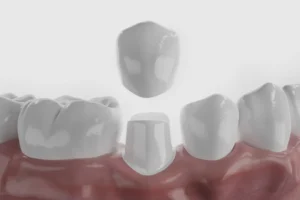 Keep the crown, even if it looks damaged. When a dental crown falls out, your dentist will want to check the crown and the tooth to work out why it came off. That check also shows whether the existing crown can be reused.
Rinse the crown gently. Hold it under running water to clear away food and debris. Pat it dry and store it in a small zip-lock bag or a clean pill container.
Test the fit before using any cement. Before you add anything, check that the crown sits properly and your bite feels right. Never push a crown or post into place, because the tooth may fracture. If the fit is good, line the inside with a small amount of temporary dental cement, seat it, bite firmly and clear away any excess cement with a toothpick and floss.
Never use super glue or household adhesives. Stick to a temporary cement from a pharmacy instead. A proper repair is something your dentist will handle when it’s time to fix the crown permanently.
If the crown won’t sit properly, protect the tooth instead. A small piece of dental wax pressed over the tooth can soften rough edges against your tongue and cheek.
Is a Dental Crown Falling Out an Emergency?
Usually, it’s urgent rather than an emergency. The tooth needs protection soon, but most lost crowns can wait for the next available appointment. Certain symptoms change that, so it helps to know which ones mean you should contact a dentist promptly.
Without its cover, the tooth underneath loses its shield against heat, cold and biting pressure. Some patients feel nothing at all, while others notice sharp sensitivity to cold foods or sweet drinks. Advice on toothache signs needing prompt care says to see a dentist as soon as possible if pain lasts more than two days or doesn’t improve with pain relief. It also lists a fever, trouble swallowing, pain when biting, a bad taste and swelling in the cheek or jaw as reasons to book in.
The same advice recommends emergency medical care if swelling affects your breathing or speaking, or spreads around your eye or neck. In that situation, call 000 or go to your nearest hospital emergency department. Facial swelling without those symptoms is still a dental emergency, so contact a dentist immediately and explain what’s happening. That way, the clinic can arrange emergency dental care as soon as possible.
A missing crown without these signs still deserves a call rather than a “wait and see” approach. Leaving the tooth uncovered for weeks may allow further damage.
How to Eat, Clean and Stay Comfortable While You Wait
A few small changes can protect your tooth and keep you comfortable until your appointment.
Chew on the other side. Try to avoid chewing on the affected side, and let the opposite side of your mouth do the work. The tooth may be weaker without its crown.
Choose soft foods. Scrambled eggs, yoghurt, soups, pasta and well-cooked vegetables are kind to a sensitive tooth. Steer clear of hard or sticky foods, such as nuts, popcorn kernels, toffee and chewing gum, since biting hard foods can break teeth.
Keep the area clean. Brush gently around the tooth with a soft toothbrush, and don’t skip the area because it feels odd. Rinsing with warm water helps clear food from around the tooth. If a sharp edge has made your gum or cheek sore, warm salt water rinses may help it settle: mix half a teaspoon of salt into a cup of warm water, rinse, then spit it out.
Why Do Dental Crowns Fall Out?
Most crowns come loose because the seal between the crown and tooth breaks down. Common reasons include worn dental cement, decay under the crown, teeth grinding, biting on hard or sticky food and a weakened tooth with too little remaining tooth structure to grip the crown.
- Cement wear over time. The cement under a crown takes daily pressure from chewing. Over the years, small gaps may open at the edge and let the bond weaken.
- Decay underneath. Crowned teeth can still decay and may need more treatment later. As tooth decay underneath spreads, the underlying tooth structure softens, and the crown can lose its hold.
- Teeth grinding and clenching. Grinding puts heavy, repeated force on teeth, and grinding can break dental restorations such as fillings. If grinding is a concern, your dentist may suggest a bite splint to wear at night, which helps protect teeth even though it won’t stop the grinding itself.
- Very little tooth left to hold on to. Crowns are often placed on teeth that are already badly broken or heavily filled. When the remaining structure is small, there’s less surface for the cement to grip.
- Sticky or hard foods. A chewy lolly can pull upward on a crown, while biting ice or hard lollies can crack the cement or the tooth.
A loose crown may give a warning before it falls. If your crown wobbles, clicks or traps food when you bite, see your dentist early.
What If It’s a Temporary Crown That Fell Off?
A temporary crown protects your shaped tooth while our dental laboratory makes the permanent crown, which is usually fitted one to two weeks later. It’s designed as a short-term cover until your final crown is fitted.
If your temporary crown falls off, keep it and call our dental office, so we can check the tooth and refit or replace the temporary until your final crown is ready. In the meantime, the shaped tooth may be sensitive, so cover it with dental wax or reseat the temporary with a pharmacy cement if it fits easily.
What Does the Research Say About Crowns Coming Loose?
Research suggests a crown that comes loose may be reused, and the shape of the tooth, the crown and the cement all play a part.
A 2026 study followed 117 resin crowns on molars for four years. Of the 14 crowns that came off, every recemented crown stayed in use. The researchers also found that the shape of the prepared tooth, the thickness of the crown and the type of cement affected the risk of a crown coming loose.
Wider habits and bite factors matter too. A 2025 review of studies on single crowns found that grinding and bite balance affect crowns, along with the health of the tooth’s nerve and the design of the crown’s edge.
These findings describe groups of patients, not individual results. How a crown behaves in your mouth depends on your individual situation.
What Happens When You See Your Dentist About a Lost Crown?
Your dentist will examine the crown and the tooth, and may take an X-ray to check for decay or cracks. If both are sound, the crown can often be cleaned and cemented back on. If not, you may need a new crown, a rebuild of the tooth or, in some cases, further treatment.
Expect a few questions first, such as when the crown came off and whether the tooth hurts. After the fallen crown and the tooth have been checked, the options typically fall into three groups.
 Cementing the same crown back on. If the tooth is healthy and the crown fits well, having the crown reattached may be possible. Your dentist removes old cement, checks the fit and bite and then cements it again.
- Making a new crown. If the crown is cracked, no longer fits, or the tooth needs work underneath, you may need a new crown. At our practice, we offer porcelain crowns and gold or metal alloy crowns, and a new crown usually takes two appointments.
- Rebuilding or treating the tooth first. Where decay has reached deep into the tooth, it may need a core build-up before a new crown can be made. Depending on what your dentist finds, a temporary repair may come first, and further treatment such as root canal treatment may be discussed.
 Cementing the same crown back on.
Your dentist will explain the suitable options, likely costs and number of visits before anything goes ahead.
How to Look After a Crown Once It’s Back in Place
Everyday habits play a big part in how well a crown holds up, and a crowned tooth needs the same care as your natural teeth.
Brush twice a day with fluoride toothpaste. Public health guidance recommends brushing twice daily with soft bristles, using a soft-bristled toothbrush with a small head. Pay attention to the gumline around the crown, where plaque likes to settle, and spit out the toothpaste rather than rinsing.
Clean between your teeth every day. Floss or interdental brushes reach the crown edges and the gaps beside adjacent teeth that a toothbrush misses. Around a crown, it can help to slide the floss out sideways rather than snapping it upward against the edge.
Don’t use your teeth as tools. Opening packets, biting nails or crunching ice may chip porcelain or strain the cement.
Keep up check-ups. Seeing your dentist regularly lets them check the crown edges and spot early decay or wear across multiple teeth, and check-up timing depends on individual needs. Good oral hygiene at home and professional checks work together to support your oral health.
A Considered Approach to a Dental Crown That Fell Out
A lost crown can feel unsettling, but it’s a common problem with clear next steps. Keep the crown safe, protect the tooth, eat with care and arrange an assessment. What happens next depends on the health of the tooth and the condition of the crown, and individual outcomes vary.
If your dental crown fell out and you’d like the tooth and crown checked, please call us at Balmoral Dental Centre on (07) 3113 9789. Our dentists can examine the tooth, explain what they find and discuss the options that may suit your situation.
Frequently Asked Questions
What should I do if I swallowed my crown?
Most swallowed objects pass naturally. Call your doctor for advice and watch for symptoms over the next couple of days, then call us about replacing the crown. If you have breathing problems, chest pain, vomiting or choking when you eat or drink, call 000.
Can a crown on a dental implant come loose?
Yes, although the cause can be different. Crowns on dental implants are attached with a screw, cement or both, so a loose implant crown may need a different kind of repair from a crown on a natural tooth. If an implant crown feels loose or comes off, keep it and call us.
Can a crown fall off a child’s baby tooth?
It can happen, and how often depends on the crown material. A review of crowns on baby teeth found five-year retention between 83% and 98%, depending on the material used. If your child’s crown comes off, keep it and book a visit so the tooth can be checked.
Will my health fund cover having a crown recemented or replaced?
It depends on your level of extras cover and any waiting periods or annual limits on your policy. Ask us for an itemised quote, then check with your fund before treatment.
What if my crown falls out on a weekend?
Balmoral Dental Centre is open seven days, and we reserve appointment times each day for urgent problems. We’re closed on public holidays, so on those days follow the steps above to protect the tooth and call us when we reopen.
References
Healthdirect Australia. Toothache and gum swelling (last reviewed February 2026). https://www.healthdirect.gov.au/symptoms/aches-and-pains/toothache-and-gum-swelling
Better Health Channel, Victorian Department of Health. Teeth grinding (reviewed October 2025). https://www.betterhealth.vic.gov.au/health/ConditionsAndTreatments/teeth-grinding
Ban S, Mine A, et al. 3D digital data analysis to identify factors influencing debonding of CAD-CAM resin composite molar crowns: A 4-year clinical study. Journal of Prosthodontic Research. 2026. Summary: https://global.dent.osaka-u.ac.jp/2026/04/13/elucidating-factors-causing-debonding-of-cad-cam-resin-composite-molar-crowns-under-the-japanese-national-health-insurance-system/
NSW Health Centre for Oral Health Strategy. How to brush (July 2025). https://www.health.nsw.gov.au/oralhealth/prevention/Publications/how-to-brush.pdf
Lampl S, Gurunathan D, Mehta D, Jogikalmat K. Reasons for crown failures in primary teeth: Systematic review and meta-analysis. Interactive Journal of Medical Research. 2025. https://www.i-jmr.org/2025/1/e57958
Biomechanical and occlusal factors influencing the longevity of single-unit restorations: A comprehensive review. Cureus. 2025. https://pmc.ncbi.nlm.nih.gov/articles/PMC12258076/
Pregnancy, Birth and Baby (Healthdirect Australia). Swallowed objects. https://www.pregnancybirthbaby.org.au/parenting-and-family/family-safety/swallowed-objects