
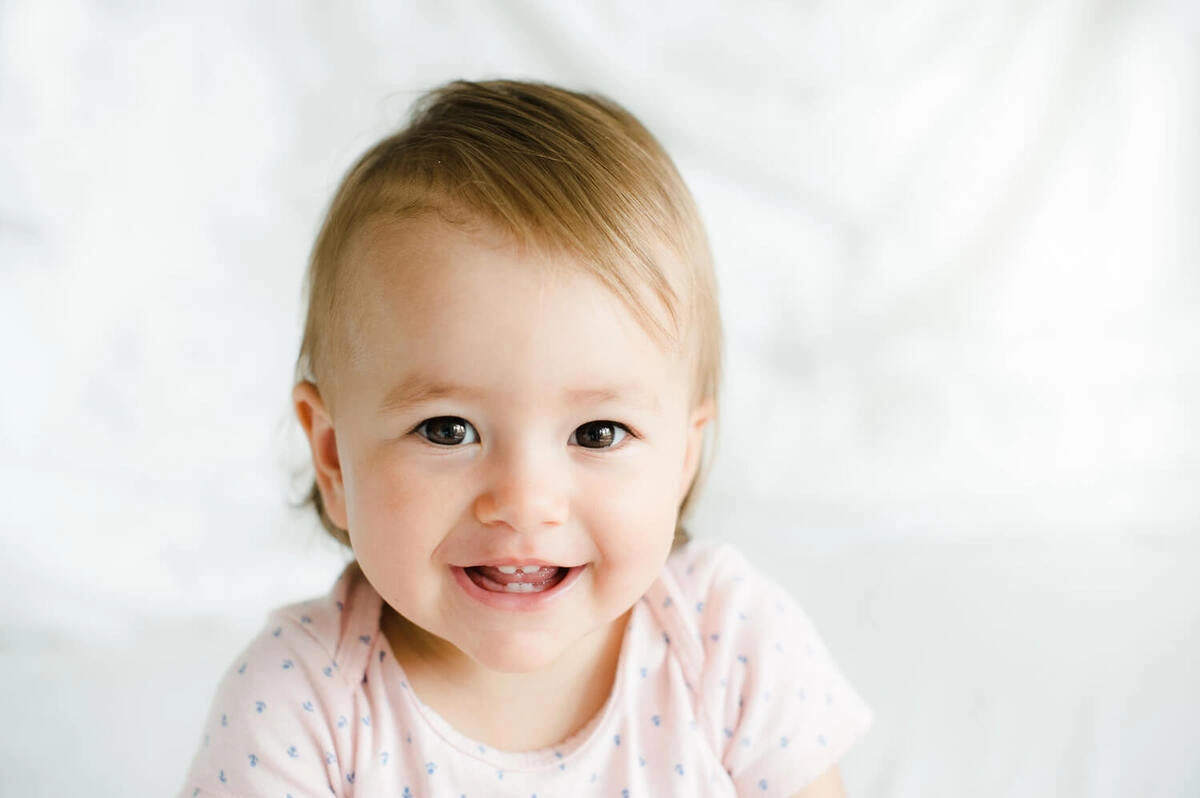
Hearing your baby grind their teeth for the first time can stop you in your tracks. The sound, a soft but distinct scraping coming from the cot, is enough to worry any parent. The good news is that baby grinding teeth is a common and usually temporary part of early development, and for most children it resolves on its own without any lasting effect.
At Balmoral Dental Centre, our dental care for children starts from the very first tooth, and we regularly reassure parents that this habit, known clinically as bruxism, is far more common than it might seem.
Quick Overview
- Baby grinding teeth is the involuntary rubbing of upper and lower teeth together, most often during sleep.
- It may occur in infants and young children, often starting around the time the first teeth emerge.
- For many babies it is a passing phase, though how long it lasts and whether it causes any tooth wear varies between children.
- Several factors may contribute, from teething discomfort to sleep patterns and stress, and not all of them are obvious.
- Whether to monitor at home or seek a dental opinion depends on specific signs that are worth knowing.
Keep reading to understand why babies grind their teeth, what to watch for, and when it is worth raising with your dentist.
Why Do Babies Grind Their Teeth?
 The precise causes of teeth grinding in young children are not fully understood. The behaviour may be related to stress and anxiety, though in babies it is more often linked to the physical experience of new teeth arriving.
When a first tooth pushes through the gum, babies may rub their upper and lower teeth together simply to explore this new feeling, to relieve the pressure of teething, or as a response to sore gums. As more teeth emerge, the jaw is also developing its alignment, and some grinding during this period is considered part of that process.
Other contributing factors can include disrupted sleep patterns, ear discomfort, or changes in routine. In older children, new experiences such as starting childcare or a change at home can also contribute to the habit.
What Are the Signs of Baby Teeth Grinding?
The most obvious sign is the grinding sound itself, which parents typically notice at night. Beyond the sound, signs to look out for include:
- Visible wear or flattening on the chewing surfaces of baby teeth
- Jaw clenching or tension in the jaw area
- Increased sensitivity or fussiness when eating
- Disrupted sleep or restlessness at night
Mild and occasional grinding is generally not cause for concern. It is worth taking note if the grinding is frequent, if you can see visible tooth wear, or if your child appears to be uncomfortable.
Does Baby Teeth Grinding Cause Harm?
In most cases, temporary grinding causes no lasting damage. Baby teeth are eventually replaced by permanent teeth, and mild wear during the early years rarely has any long-term effect on the adult teeth that follow.
That said, excessive grinding over an extended period can, in some cases, wear down tooth enamel, cause jaw discomfort, or affect sleep. Most children grow out of bruxism naturally, and not everyone who grinds their teeth needs treatment.
Practical Tips for Parents
While there is no guaranteed way to stop a baby grinding their teeth, there are some approaches that may help reduce the habit and address the discomfort that sometimes drives it.
- Offer a cold teething ring during the day to give sore gums some relief and reduce the urge to grind.
- Establish a calming bedtime routine: a warm bath, gentle music, or a quiet story before sleep can ease the tension that may contribute to nighttime grinding.
- Try a gentle gum or jaw massage before bed to relax the jaw muscles.
- Avoid overstimulation close to bedtime, as wired or unsettled babies tend to grind more.
- Check for other discomfort: ear infections or teething pain elsewhere in the mouth can trigger grinding as a response to general soreness.
Bruxism in children typically disappears without intervention, often resolving around the age of nine or ten.
When to Speak to a Dentist
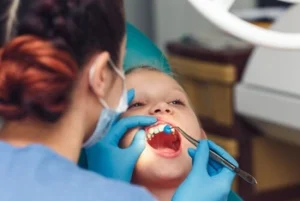 A dentist visit is worth considering if the grinding is persistent, if you can see visible tooth wear or chipping, if your child wakes frequently or seems uncomfortable overnight, or if the habit continues well past the teething stage.
At Balmoral Dental Centre, we are open seven days a week, including weekends, making it straightforward to bring your child in when concerns arise. Our dentists take a calm, thorough approach with young patients and can assess whether any monitoring or follow-up is needed.
The earlier we see a child, the easier it is to keep a helpful eye on how their teeth and jaw are developing.
Call us on (07) 3113 9789
Frequently Asked Questions
Can teething cause a baby to grind their teeth?
Yes, teething is one of the most common triggers. When a new tooth is pushing through the gum, the sensation is unfamiliar and can be uncomfortable. Babies sometimes rub their upper and lower teeth together as a way of relieving that pressure or exploring the new feeling in their mouth. This type of grinding tends to be closely tied to the teething period and often settles once the tooth has fully come through.
Does a nightguard help babies who grind their teeth?
Nightguards are generally not recommended for babies or very young children. Because baby teeth are still developing and the jaw is growing rapidly, a fixed appliance can interfere with that process. In most cases, the grinding resolves on its own without any device. For older children where grinding is causing significant tooth wear, your dentist may discuss whether any protective option is appropriate for your child’s specific situation.
 Can baby teeth grinding damage permanent teeth?
In most cases, grinding during the baby tooth years does not affect the permanent teeth that come in later. Baby teeth act as placeholders, and mild wear during this stage rarely carries over. If grinding is severe or persists into the years when adult teeth are emerging, it is worth discussing with your dentist.
Should I wake my baby if I hear them grinding?
There is generally no need to wake a sleeping baby because of grinding sounds. The grinding typically happens during lighter sleep cycles, and waking them is unlikely to help. If you are concerned about the frequency or intensity, note what you observe and raise it at your next dental visit.
Can stress cause a baby to grind their teeth?
In older babies and toddlers, stress or changes in routine can contribute to teeth grinding. Starting childcare, a disrupted sleep schedule, or unsettled periods at home can all be factors. For younger infants, physical causes like teething and ear discomfort are more commonly at the root of the habit. If you feel your child’s grinding is linked to anxiety or a change in their environment, a calm, consistent bedtime routine can be a useful starting point.
References
Pregnancy, Birth and Baby. (2023). ‘Teeth Grinding (Bruxism) in Children’. Pregnancy, Birth and Baby, June. Canberra, ACT: Healthdirect Australia. https://www.pregnancybirthbaby.org.au/teeth-grinding
Healthdirect Australia. (n.d.). ‘Teeth Grinding’. Healthdirect Australia. Canberra, ACT: Australian Government. https://www.healthdirect.gov.au/teeth-grinding
Australian Dental Association. (n.d.). ‘Teeth Grinding’. Teeth.org.au. Sydney, NSW: Australian Dental Association. https://www.teeth.org.au/teeth-grinding