

An old crown that suddenly feels different when you bite, or a new crown you’re about to commit to, can leave you asking: how long do dental crowns last? Maybe yours has been in place so long that you can’t recall when it went in, or maybe you’re weighing up whether a crown is worth it for a tooth that keeps giving you trouble. Whether you already have a crown or are considering dental crowns at our practice, it helps to know what shortens or extends a crown’s life.
At Balmoral Dental Centre, we look at the tooth, your bite and your habits together before recommending a new crown or a replacement.
Quick Overview
- A dental crown is a custom cap that covers the entire tooth above the gum line.
- Crowns are often used to protect weak teeth damaged by decay, a fracture or earlier treatment.
- In many cases, a crown can help restore strength and function for years, although no crown lasts indefinitely.
- How long crowns last depends on the tooth’s position, the crown material, grinding habits and daily oral hygiene.
- Changes in how a crown looks, feels or fits usually guide the next step.
Below, we explain what the research shows, why some crowns fail sooner and how to help yours last.
How Long Do Dental Crowns Last on Average?
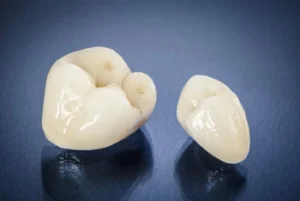 There’s no fixed average lifespan for a crown, because research measures how many crowns are still working after a set time. Recent data suggests most crowned teeth are still in the mouth after 10 years, although individual outcomes vary.
In research following a large population for up to 10 years, crowned teeth outlasted large fillings. About 93 in every 100 teeth with a crown had not been removed after a decade, compared with about 89 in every 100 teeth with a large dental filling.
That figure tracks the original tooth rather than the crown, so dental crown longevity is better understood through the factors below.
Does the Crown Material Change How Long It Lasts?
Each crown material has its own trade-offs, but research tracking a large group of crowns found that material alone didn’t change survival in a clear way. The tooth and the forces on it tended to matter more.
- Gold crowns and other metal alloys: Metal crowns are strong and can be made thinner, which may mean less tooth is removed. They’re visible, so they’re more often chosen for back teeth.
- Porcelain fused to metal: Porcelain sits over a metal base, giving a tooth-coloured surface with a strong core. The outer porcelain can chip under heavy load.
- Zirconia crowns: This strong, tooth-coloured ceramic can be made as one solid piece or layered with porcelain.
- Pure porcelain crowns: An all-ceramic crown is often chosen for front teeth crowns, where appearance matters most. A solid ceramic crown tends to chip less than layered porcelain, though it can occasionally fracture.
- Composite resin crowns: Resin crowns are sometimes used as an interim option while a final crown is planned.
Choosing an appropriate material depends on where the tooth sits, how much remaining tooth structure there is and how heavily you bite.
Why Some Crowns Fail Sooner Than Others
Crown failure is rarely about the crown alone. When failure occurs, the most common reasons are the crown coming loose, the loss of the tooth underneath and fractures. Several factors can raise the risk:
- Tooth position: One study comparing front and back teeth found that front crowns failed more often, possibly because they take biting forces at an angle.
- Root canals: Teeth without a living nerve, usually after root canals, had a higher failure rate. These teeth often have less natural structure left.
- Teeth grinding: Grinding or clenching can raise the risk of failure, likely by adding to normal chewing forces.
- Decay at the edge: The crown can’t decay, but decay can develop under a crown at the crown margin, where the crown meets the tooth. Poor oral hygiene lets plaque collect along this edge.
- Gum disease: Gum disease can weaken the bone that holds a crowned tooth, which may loosen it.
- Fit and preparation: How the tooth was shaped and how closely the crown fits also play a part.
Signs Your Crown May Need a Check
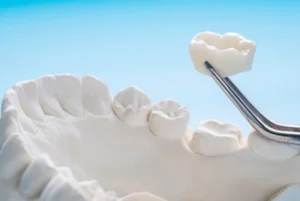 A worn or failing crown doesn’t always hurt, so small changes are often the first clue. Look out for a crown that moves slightly when you chew, a rough or chipped edge, a dark line near the gumline, sensitivity to hot and cold, or sore gums around one tooth.
A bite that suddenly feels different may mean the crown or the opposing teeth have changed. Your dentist may take an X-ray to look at the underlying tooth, because decay beneath a crown isn’t always visible. A proper diagnosis matters, since the same symptom can point to a loose crown, a cracked tooth or another dental problem.
How to Help Your Crown Last
Crowns need the same proper care as natural teeth, and a few daily habits may help extend a crown’s longevity:
- Brush twice a day with fluoride toothpaste.
- Clean between your teeth daily with floss or interdental brushes, paying attention to the edge of the crown.
- Avoid chewing ice, removing bottle caps or using your teeth to open packaging.
- If you grind or clench, a custom night guard may help cushion your crowns overnight.
Regular check-ups give your dentist a chance to spot small changes early. Good daily dental care also protects the natural enamel and root that the crown relies on.
 A Considered Approach to Crown Care
 A Considered Approach to Crown Care
A crown that’s loosening, chipped or leaking at the edge can let decay or a fracture reach the tooth it’s meant to protect. In many cases, the earlier these changes are found, the better your chances of keeping the original tooth. At Balmoral Dental Centre, our dentists check the fit and edges of existing crowns, assess the tooth beneath, and offer porcelain, porcelain fused to metal and gold crowns made through our dental laboratory when a replacement is needed. To have your crown checked, please call us on (07) 3113 9789.
Frequently Asked Questions
How long do dental crowns last on a dental implant?
An implant crown replaces a lost tooth, so there’s no natural tooth beneath it that can decay. The crown can still chip, wear or loosen, and the gum and bone around the implant need daily cleaning. How long it lasts depends on your bite, your oral health and the materials used.
Can a chipped crown be repaired instead of replaced?
Sometimes. A small chip in porcelain can often be smoothed or repaired in the chair, while a larger chip may mean the crown needs to be repaired or remade.
Can a crown be replaced without another root canal?
Often, yes. If the nerve inside the tooth is healthy, or earlier root canal treatment is still sound, a new crown can usually be made without further root treatment. An X-ray helps show whether anything more is needed first.
Can teeth crowns be whitened?
Not in the way natural teeth can. Whitening products lighten natural tooth enamel, but they don’t change the colour of porcelain, zirconia or resin. If you’re planning to whiten, it’s usually done before a new crown is made, so the crown can be matched to your lighter shade.
How long does it take to replace an old crown?
At our practice, a replacement crown usually follows the same two-appointment process as a new one. At the first visit, the old crown is removed, the tooth is prepared, an impression is sent to our dental laboratory, and a temporary crown is fitted. The new crown is cemented at a second visit one to two weeks later.
References
Healthdirect Australia. Dental crown procedure. Last reviewed February 2025. https://www.healthdirect.gov.au/dental-crown-procedure
Olander J, Kowar J, Barkarmo S. Long-term clinical outcomes for single dental crowns versus extensive direct restorations: a register-based cohort study with up to 10 years of follow-up in a Swedish population. Journal of Dentistry. https://www.sciencedirect.com/science/article/pii/S0300571225007109
Hawthan M, Chrcanovic BR, Larsson C. Retrospective clinical study of tooth-supported single crowns: a multifactor analysis. European Journal of Oral Sciences. 2022. https://onlinelibrary.wiley.com/doi/10.1111/eos.12871
Pjetursson BE, Pitta J, Balet A, et al. A systematic review and meta-analysis evaluating the survival, failure, and complication rates of metal-ceramic, veneered, and monolithic all-ceramic tooth-supported single crowns, Part 1. https://pubmed.ncbi.nlm.nih.gov/41489982/